
ABOUT
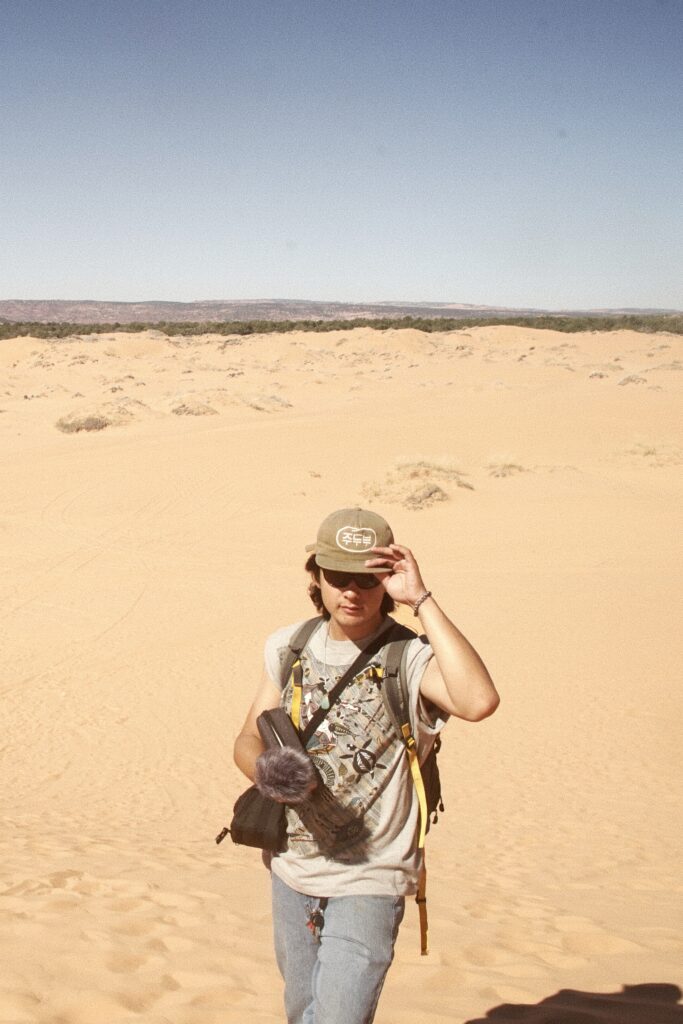
Nathan Sherwood Liang is a composer and field recordist from San Francisco whose recent work explores the power of mythology and the natural processes of ecology and geoscience. Through research-driven composition, live soundscape manipulation, and interdisciplinary collaborations with musicians, artists, scientists, and filmmakers, Nathan’s music translates scientific concepts and data into immersive sonic experiences, investigating the relationship between humanity and wilderness and highlighting stories which reflect—and question—our aspirations for a better world.
Instagram →
Youtube →
Qobuz →

WHITE BUFFALO LAND TRUST RESIDENCY
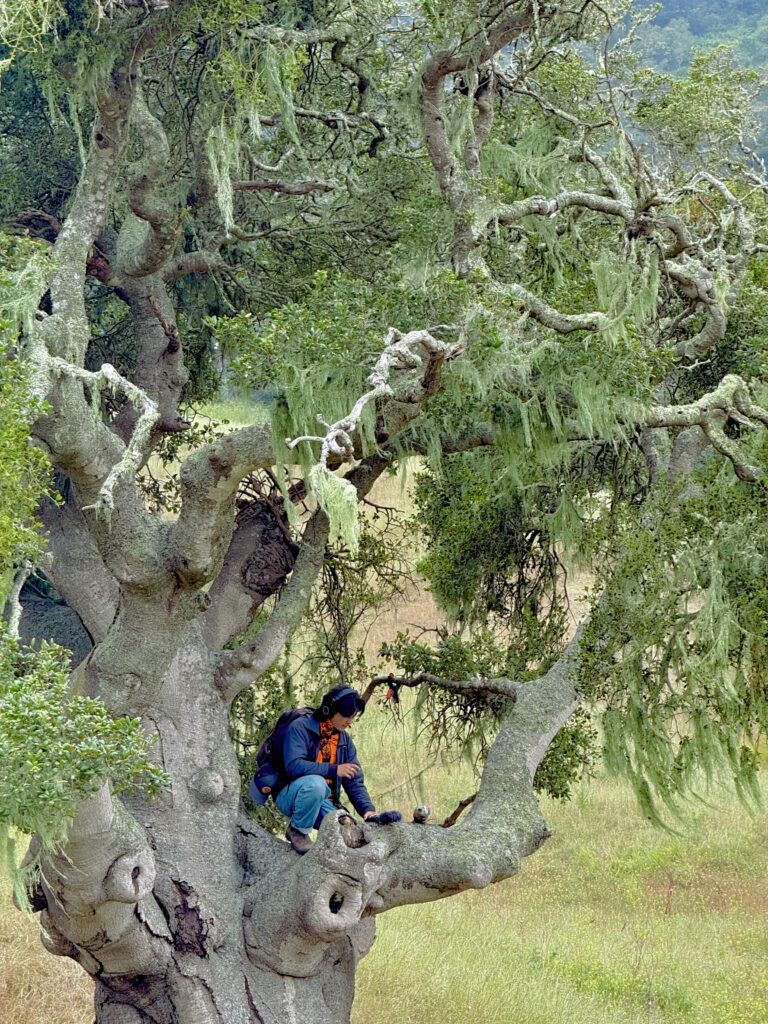
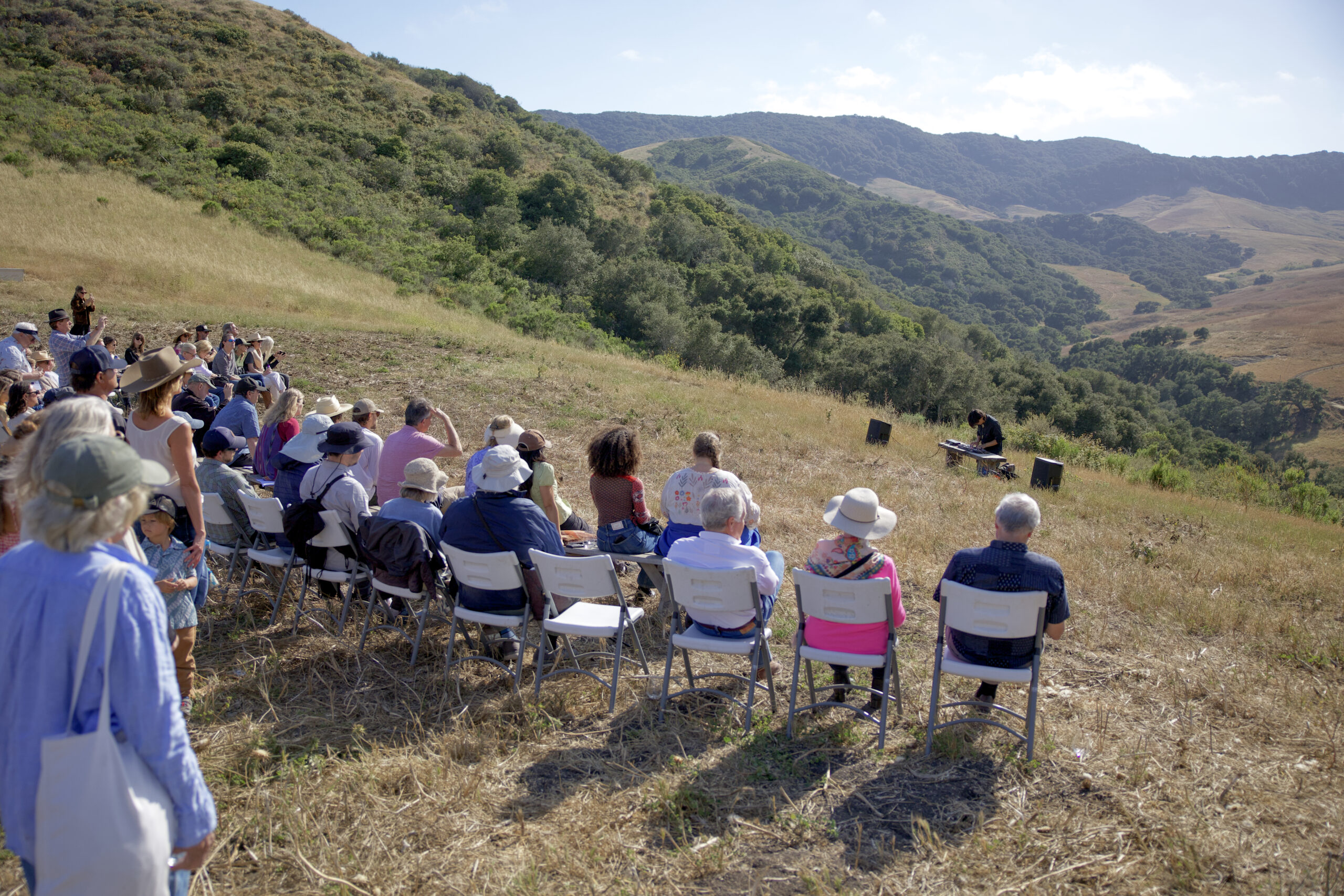
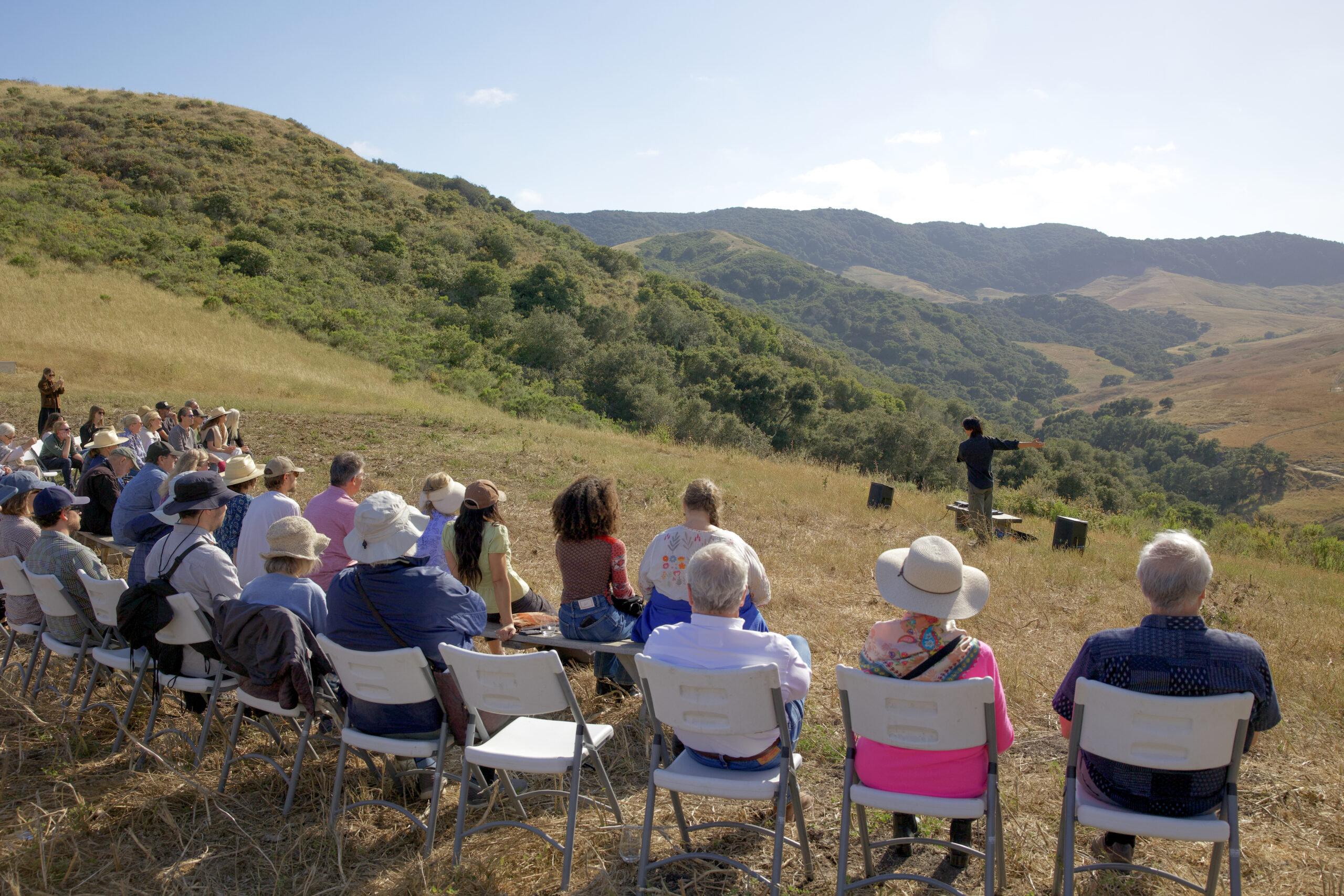
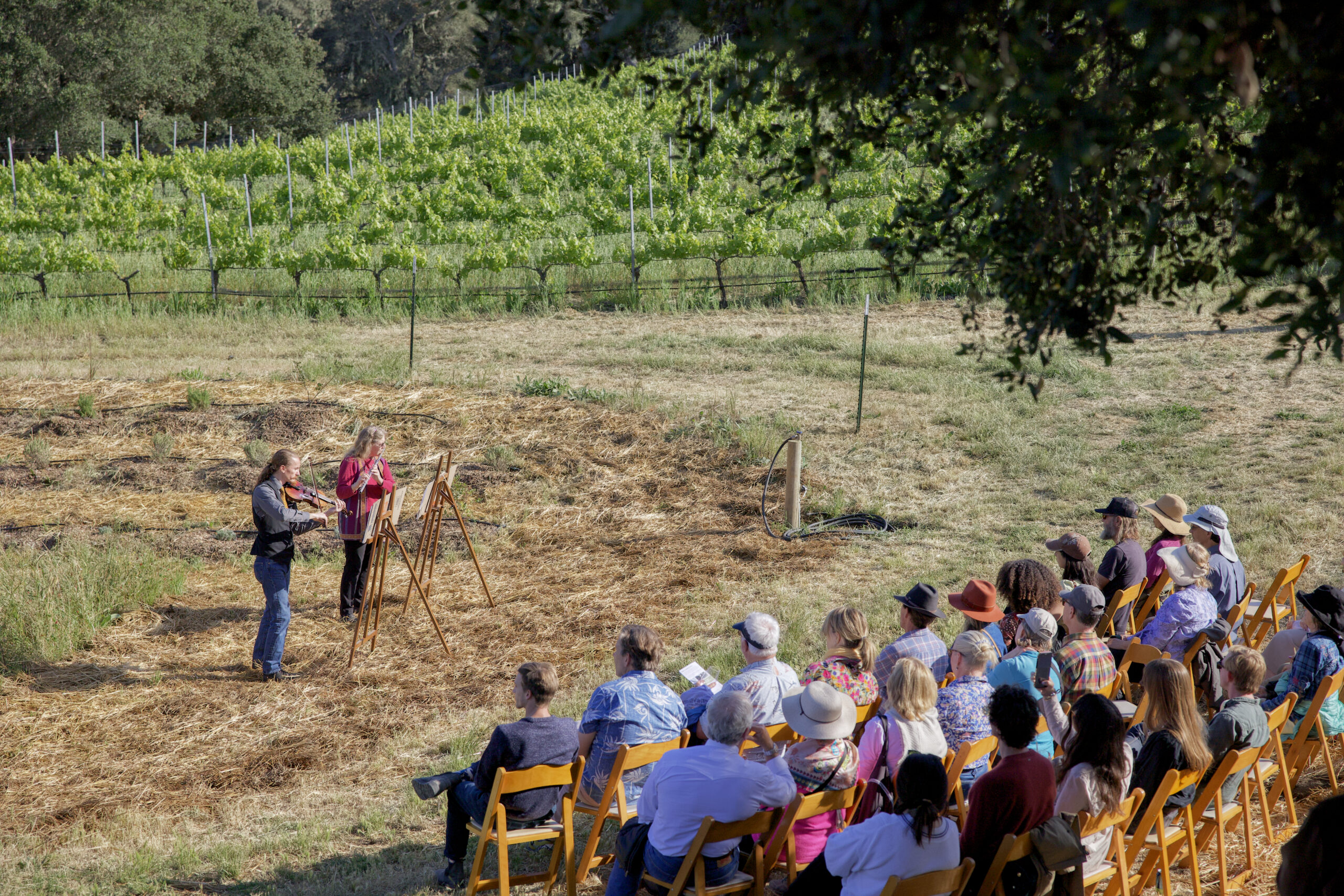
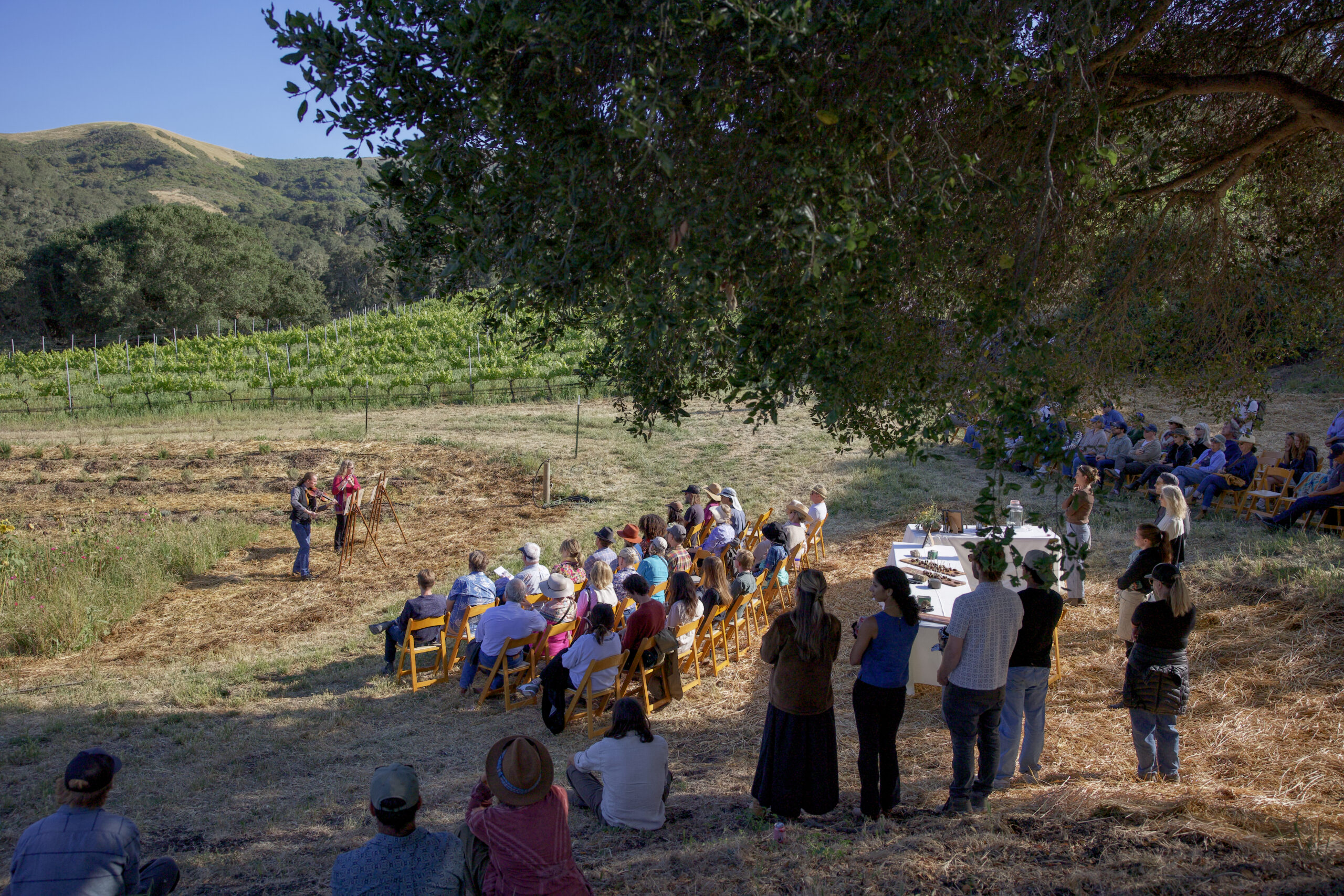
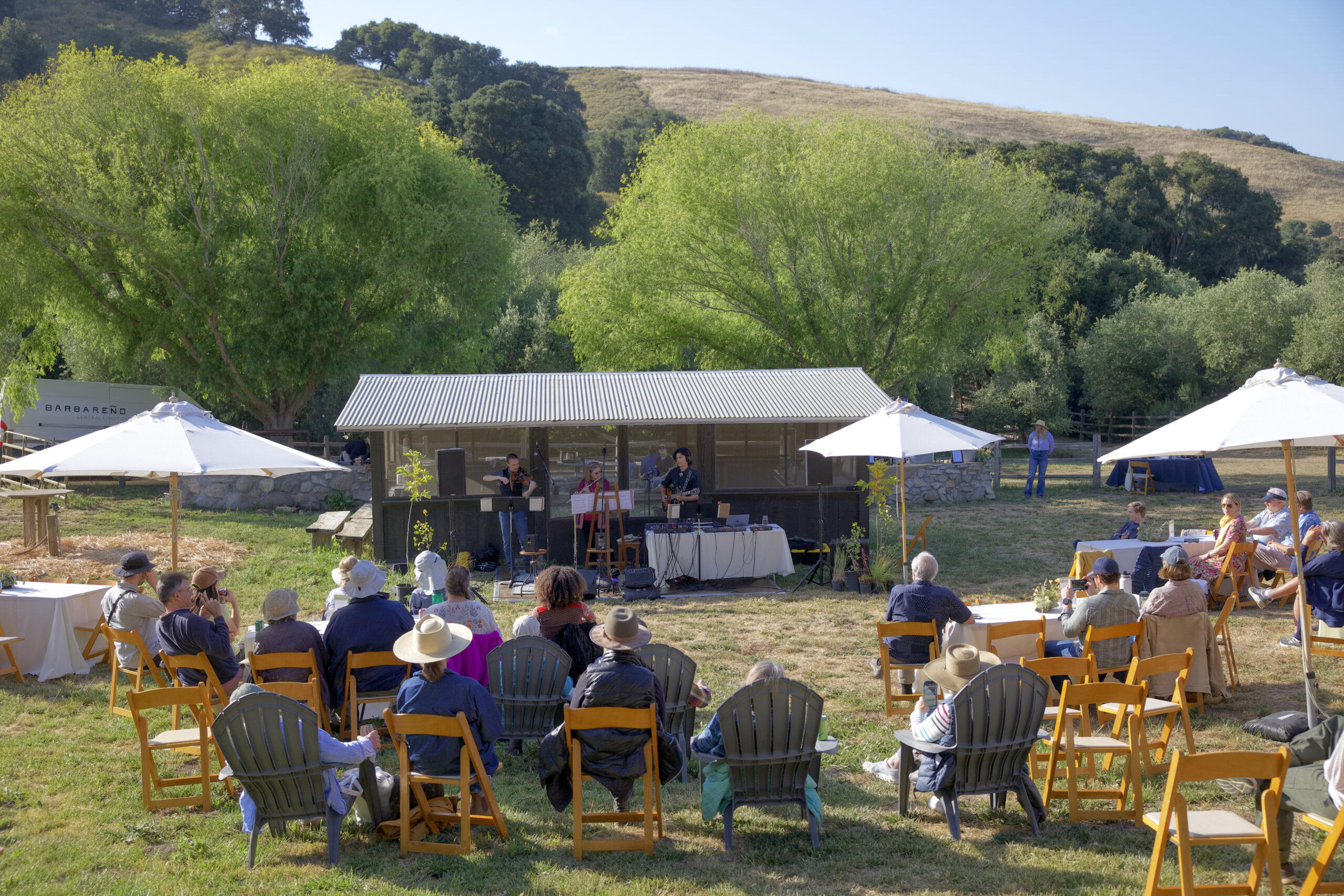
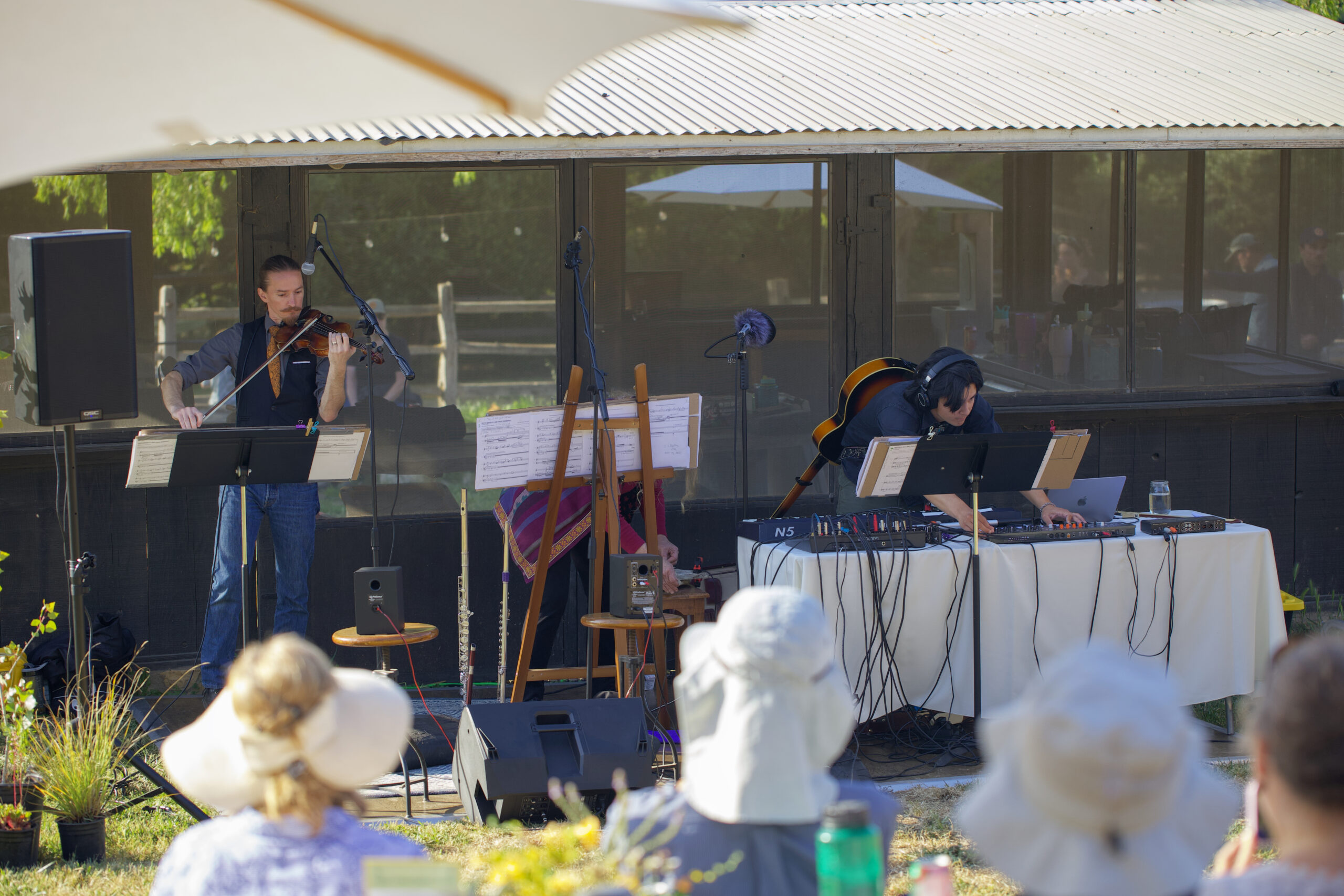
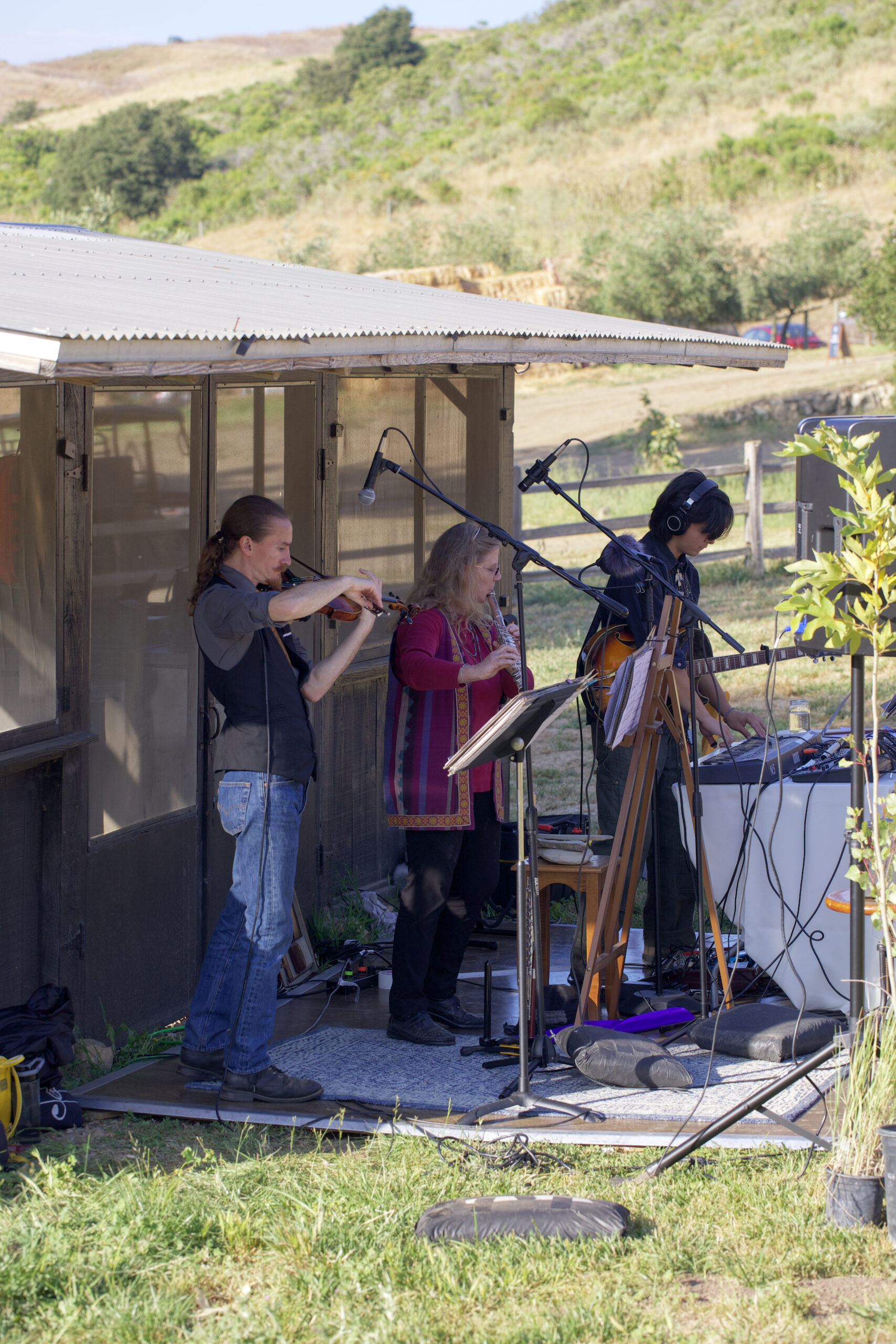
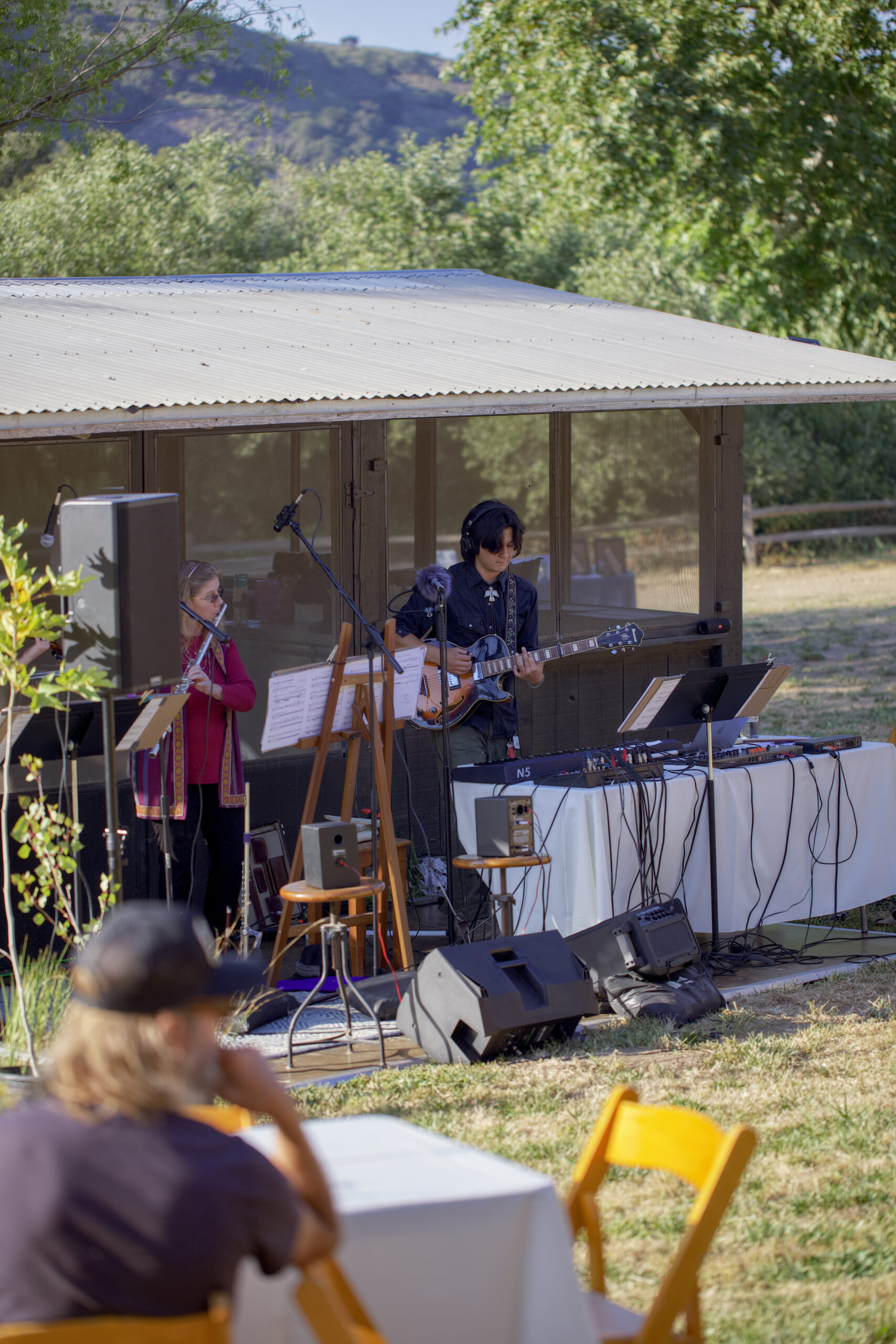
In invitation, a gift is a suite of 11 pieces written and performed for the White Buffalo Land Trust Residency at Jalama Canyon Ranch. After six weeks of field recording around the thousand acres of the Ranch, working with White Buffalo’s research and monitoring team to create interactive instruments based on data sonifications, and composing and rehearsing with local musicians Darrell Conrad (vln.) and Jane Hahn (fl.), the project culminated in a three-hour progressive performance at three different locations on the Ranch, highlighting the land’s different ecologies, its geological history, and the beautiful optimism of regenerative agriculture with a mix of electro-acoustic instrumentation, data sonification, field recordings, and in-time soundscape manipulation featuring live streams of the Ranch’s natural ambiance.
During the residency, Nathan also led a workshop and guided sound-walk with a local high school group, teaching basic principles of acoustical physics and soundscape ecology, and was featured as the subject of a short documentary by filmmakers Matthew Benton and Isabela Zawistowska.
Listen to the full performance, with annotations from the composer →
Here
Bluebird & Precession
Hear
Green, green
Diatomite
Space Launch
Catchment
Vineyard
Riparia
Oak
Pratorum
“Artists help us perceive the living world in new ways. Nathan’s work translates ecological relationships into sound, offering a powerful way to experience the rhythms of land stewardship, biodiversity, and regeneration.”
-Ana Smith, Director of Programs and Engagement
at White Buffalo Land Trust
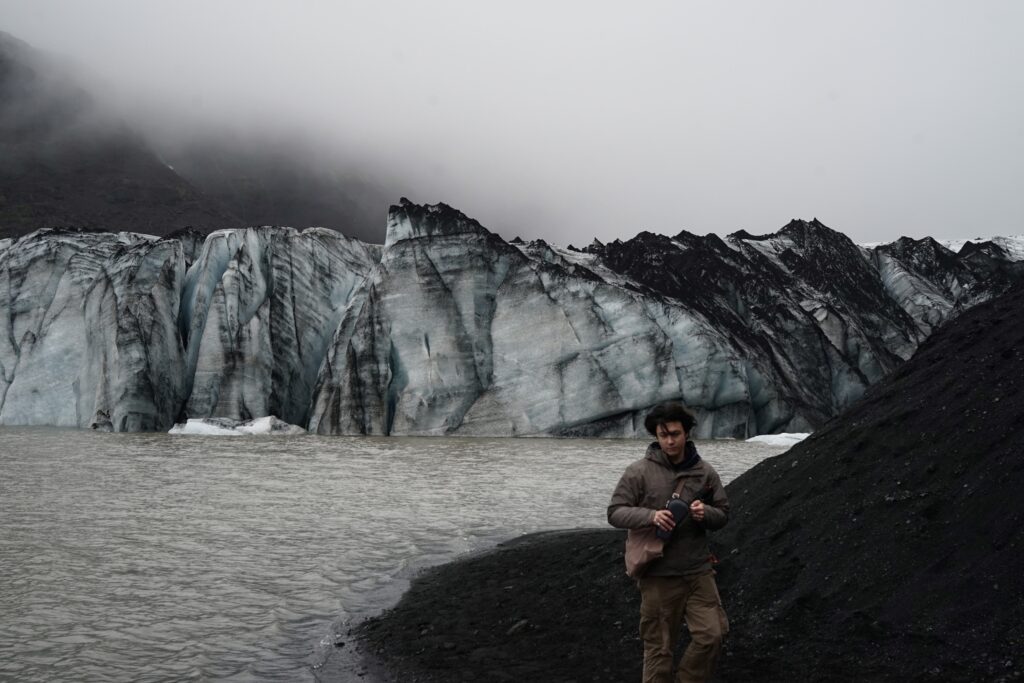
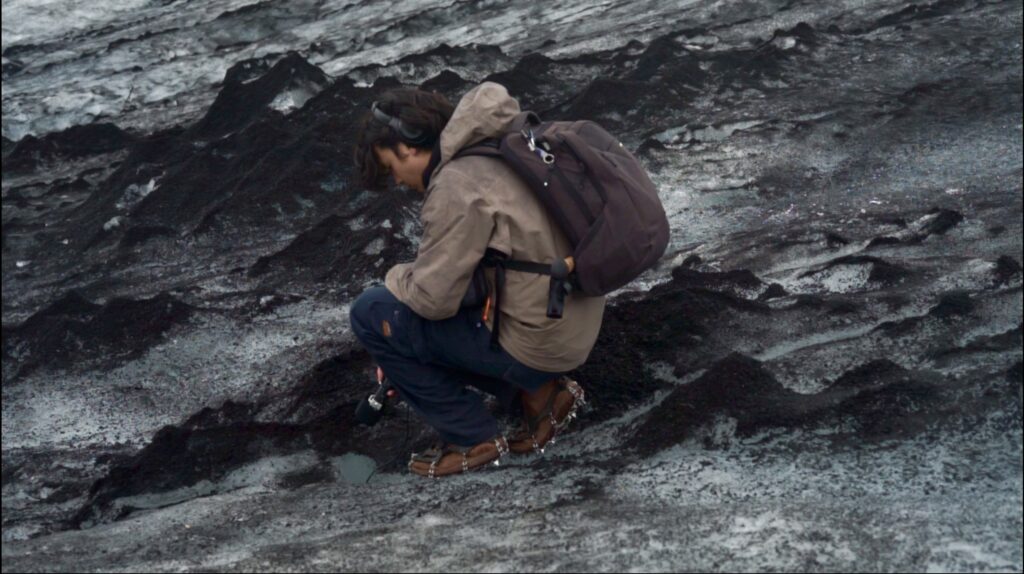
Those Who Favor Fire is a 20-minute piece in two movements for choir, chamber orchestra, and electronics. The piece examines recent wildfires and glacial retreat as a product of human greed and uses samples recorded in Iceland to create an immersive space. This project involved six weeks of solo travel in Iceland—with funding from the Russell Bostert Memorial Fellowship—where I recorded glacial soundscapes and filmed interviews with local composers for a documentary about the intersection of music and environmentalism.
PROGRAM NOTE
On September 9, 2020, ash and smoke streaming from hundreds of thousands of acres of burning wildfire in the Pacific Northwest converged over San Francisco, blotting out the sun and turning the sky a dark, rich orange. Waking up at midday to the night-dark sky and looking out over an orange-tinted ocean, it felt in every sense like the beginning of the apocalypse, the premonition of a future without blue skies. This is the scene onto which Those Who Favor Fire opens. Taking inspiration from literature of the end of the world—including Robert Frost’s Fire and Ice, Andri Snær Magnasson’s On Time and Water, and the ancient Icelandic poem Völuspá—and drawing upon my memory of this rising tide of fires, the first movement attempts to convey the mythological scale of our environmental collapse. At the end of the movement, the choir lists the name of every wildfire that burned in California in 2020, as well as places around the world whose fires defined my memory of this stretch of relentless burning: Australia (2019) and Hawaii (2023) among them. The voices rise into chaos, an incomprehensible tower of names that collapses with the impact of a massive wave.
In the second movement, we are transported to an utterly different environment. The electronics introduce sounds recorded on the glaciers of Iceland’s southern coast, immersing the audience in a soundscape of trickling water and calving icebergs. The orchestra reacts to the sounds without comment, becoming a part of the landscape itself and creating a sense of geologic time. Bit by bit, the human world encroaches on the incredible slowness of glacial timescales—Milankovitch cycles overtaken by the rate of human industry—and water begins to flow with increasing fervor. A low throbbing of seismic data from the Ross Ice Shelf in the electronics adds the language of science to the movement. Like the piece itself, this data sonification, created by geophysicists Richard Aster and Julien Chaput, attempts to translate the timescale of glaciers into a timescale perceptible by the human ear. But it is not fast enough to span the history of the glaciers’ collapse. Metric modulations in the viola and piano compress our sense of time further as swelling strings and winds—representing seasonal carbon flux—show the passage of each quickening year. Over this rushing sense of time, the strings begin a steady rising, and the pulse intensifies into an overwhelming, club-like beat. In the end, the rising, pulsing strings are overpowered by the sounds of water pouring down moulins and into massive subglacial rivers. The deafening torrent is cut short, leaving us to picture a world without ice: a world where moraines and eskers are our only reminder of a once unconquerable landscape.
Those Who Favor Fire is about the shifting of timescales through human greed. In Iceland, a few centuries of oil and coal-burning has just begun to erase a ten-thousand-year dynasty of glaciers. Fossil-fuel-induced climate change is at play in the wildfires of California as well, but the full truth of wildfires is more complicated—a convergence of climate factors, water extraction, and the abandonment of proper forest management practices. As the rate of our consumption surpasses the rate of natural systems, we disrupt non-human timescales and draw the Earth’s resources away from nature—from million-year-old coal seams to power plants, from wetlands to beach resorts. With Those Who Favor Fire, I hope to create a space to feel the changing time of our environment and our society.
GREEN, GREEN (EP)
TRACK LIST
The Death of a Tropical Plant
Green, green
Rising early in the rain at Lake Dunmore
Highway 40
Marine Cloud Brightening


The ocean is perhaps nature’s greatest musical instrument—it’s certainly inspired musicians for many hundreds of years—but it isn’t an instrument most people have had the opportunity to play. TSO aims to give anyone that chance.
This project is part of an NSF-funded multi-year research project led by Rónadh Cox (Williams College Geosciences) on boulder beaches, wave physics, and coastal geomorphology. The musical component is a means to communicate the research to the public, and includes this sample library, as well as compositions from several composers. We hope to give listeners, and users of this library, a visceral sense of how massive storm waves can be, and how forcefully they interact with the coastline.
SONGS & IMPROVISATION
Green, green is an original composition for voice and guitar inspired by the lyricism and concepts of Robin Wall Kimmerer’s Braiding Sweetgrass: Indigenous Wisdom, Scientific Knowledge, and the Teachings of Plants (2013) and contemplating my own changing relationship with the natural world and the idea of ‘wilderness.’
The chorus addresses nature itself, reflecting:
Green, green
I’m falling out of your graces, green
Can’t stay afloat in your branches green
I’ve forgotten how to climb and I think I’ve lost you for a while
This arrangement of Moses Sumney’s Polly (2020) features vocals, guitar, and electronics performed by myself and string arrangement which draws on traditional Hollywood string writing to emphasize the song’s timelessly potent lyrics.
DRAMATIC PROJECTS
The Greek Myths series was commissioned by the Traveling Players Ensemble (Tysons, VA) for their summer productions of Persephone (2020), Atalanta (2021), Heracles (2022), Eros and Psyche (2023), Orpheus and Eurydice (2024), and Arachne (2025)
THE BRIDGE

The Golden Gate Bridge is constantly under construction for upgrades and maintenance, most of which go unnoticed by me and the other San Franciscans. But a recent upgrade to the guard rails, meant to minimize air-drag, had an unexpectedly musical side effect.
When the wind pouring through the narrow bay inlet rises to about 30 miles per hour, the whole two-mile bridge resonates with an eerie call so loud it can be heard throughout the whole city and as far as Berkley. The guard rails’ engineers had inadvertently created the largest instrument in the world.
The bridge is also home to a number of fog horns—the essential sound of a childhood spent mostly in the fog. The reliable toll of the fog horn woke me up almost every morning for the first 19 years of my life. It’s a sound every San Franciscan knows.
The Bridge is a library of instruments from sounds around the bay. It includes the singing of the Golden Gate Bridge, the fog horn, a small exhibit at the end of a jetty in the Marina harbor called the Wave Organ, and other San Francisco sounds.